Last updated: Monday 12 October 2026. This is a developing story, and I’ll add new information to the updates section as it comes in.
Imagine popping into the supermarket for a bag of frozen peas and finding the freezer warmer than a Dutch summer. That is more or less what happened overnight in France, where hackers broke into the systems that control supermarket refrigeration and turned fridges and freezers into ovens. Some reportedly hit around 50°C. At the same time, much closer to home, Albert Heijn, Etos and Gall & Gall lost their apps, websites and home deliveries to a separate “cybersecurity incident”. Here is what we know about both, and what it means if you shop in the Netherlands.
What happened to the supermarket fridges?
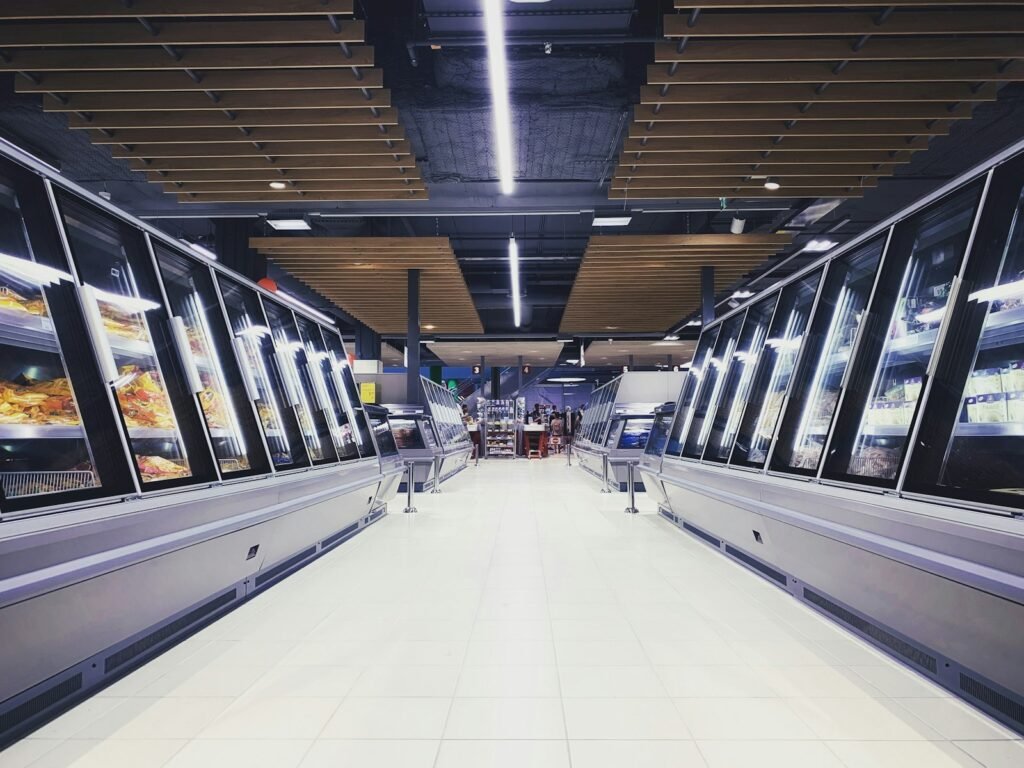
Shortly after midnight, overnight from Sunday 11 to Monday 12 October 2026, attackers got into the remote control software of refrigeration equipment in French supermarkets. They did not simply switch the cooling off. Instead, they abused the defrost function. Defrosting is normally a short, controlled warm cycle that clears ice from the cooling coils. The hackers reportedly set it to run permanently at high temperature, so cabinets kept heating up for hours in empty stores.
By the time staff arrived on Monday morning, fridges and freezers in some stores were reportedly at around 50°C, and fresh and frozen products had to be thrown away.
Which supermarkets were affected?
- Intermarché: early reports say around 150 stores had problems.
- Système U (Coopérative U, Super U): the cooperative confirmed that refrigeration installations were hit.
- E.Leclerc: stores affected, scale still unclear.
- Metro and independent shops, including butchers, were also reportedly hit, because they use the same kind of equipment.
In Haguenau in Alsace, one Intermarché reportedly lost its entire frozen stock, worth around €50,000, while a nearby Super U lost fresh and frozen products worth about €220,000. Across France, the total damage is expected to run into the millions of euros.
Coopérative U boss Dominique Schelcher called the attack unprecedented and unacceptable, saying it is the first time criminals have gone after such critical cooling systems on this scale. The chains have set up crisis teams and are working with refrigeration specialists to get everything back up and running.
How did the hackers get in?
According to French media, the targeted systems were made by Danfoss, a Danish company whose controllers are widely used to monitor and manage supermarket refrigeration remotely. Reports point to older versions of the control software. At the time of writing, Danfoss had not publicly confirmed the cause or which versions were involved, and nobody has claimed responsibility.
Weaknesses in older Danfoss supermarket controllers have been flagged before. The US cyber agency CISA has published advisories about the AK-SM 8xxA series, covering authentication weaknesses and issues that could let an attacker change settings. Whether that is how this attack worked has not been confirmed.
The bigger lesson is an old one with a new twist: anything connected to the internet can be attacked, and that now includes your local supermarket freezer. Many of these systems are reachable remotely so maintenance companies can keep an eye on them. If that access is not properly locked down with things like a VPN, multi-factor authentication and up-to-date software, it becomes a way in.
Were supermarkets in the Netherlands affected?
As far as we know right now, no. So far, only stores in France have been confirmed. Some Dutch headlines mentioned problems in Belgium as well, but no Belgian or Dutch supermarkets have been named as victims of the fridge attack.
That said, Danfoss is one of the biggest suppliers of supermarket refrigeration controls in Europe, and it is not publicly known which Dutch chains use the affected systems. You can bet Dutch retailers and their cooling contractors are checking their own installations today.
Meanwhile at Albert Heijn: a separate cyber incident
On Sunday afternoon, Albert Heijn’s website, app and customer service went offline. Ahold Delhaize, the parent company, has since called it a “cybersecurity incident”, after first describing it as an IT incident. Etos and Gall & Gall are affected too, and so is Delhaize in Belgium.
- Online orders and deliveries are paused because logistics systems are also down.
- Savings and loyalty systems are not working.
- Shelf prices may be wrong: electronic shelf labels can still show last week’s promotional prices, so the price at the till may be higher than the label.
- Stores are open as normal.
- In Belgium, Delhaize customers cannot place new orders for this week or reach customer service.
Albert Heijn says it took immediate measures to protect its IT environment, including switching some systems off as a precaution, and that protecting customer, employee and partner data is its priority. It is not yet known whether any customer data was taken, or when everything will be back.
Important: there is currently no evidence that the Albert Heijn incident and the French fridge attack are connected. They happened on the same weekend, but they are being treated as two separate incidents.
What does this mean for you?
- Your food is fine. Spoiled stock in France was thrown away, and there is no sign of hacked fridges in Dutch supermarkets.
- Check the price at the till at Albert Heijn, since shelf labels may be out of date, and keep your receipt.
- Booked a delivery? Expect it to be cancelled or delayed. AH has not said when deliveries will restart.
- Watch out for phishing. Scammers love a cyber incident. Do not click links in emails, texts or WhatsApp messages claiming to be from Albert Heijn about refunds, bonus points or “verifying your account”. Open the app or website yourself once it is back.
- Change your password once the AH site is back, especially if you use the same one anywhere else.
In het kort (Nederlands)
Hackers hebben in de nacht van zondag op maandag de koelinstallaties van supermarkten in Frankrijk overgenomen. Koelkasten en vriezers bij onder meer Intermarché, Super U en E.Leclerc warmden op tot zo’n 50 graden, waardoor verse en diepvriesproducten weggegooid moesten worden. De schade loopt in de miljoenen euro’s. Volgens Franse media ging het om koelsystemen van Danfoss. Voor zover nu bekend zijn er geen Nederlandse supermarkten getroffen door deze cyberaanval op de koeling.
Los daarvan is er een cyberincident bij Ahold Delhaize. De website, app en bezorging van Albert Heijn, Etos en Gall & Gall liggen sinds zondagmiddag plat, en de prijskaartjes in de winkel kunnen verkeerde prijzen tonen. Er is geen bewijs dat de twee incidenten met elkaar te maken hebben. Let op voor phishing: klik niet op links in berichten die zogenaamd van Albert Heijn komen.
Live updates
Monday 12 October 2026: Story published. French chains are still restoring their refrigeration and counting losses, and the attackers have not been identified. Albert Heijn’s app, website and deliveries are still down, with no restoration time given.
Sources
- VRT NWS: Cyberaanval treft koelinstallaties van supermarkten in Frankrijk
- Hackread: Hackers heat supermarket fridges to 50°C in France
- FoodPersonality: Cyberaanval treft koelinstallaties bij Franse supermarkten
- RetailDetail: Koelkasten slaan op hol in Franse supermarkten
- Cybersecurity News: Attackers reportedly hack supermarket fridges
- NOS: Geen bezorging en verkeerde winkelprijzen na cyberveiligheidsincident bij Albert Heijn
- VRT NWS: Zowel Albert Heijn als Delhaize getroffen door IT-incident
- RetailTrends: Cyberincident bij Ahold Delhaize raakt Albert Heijn, Etos en Gall & Gall